In Aidan Dodson’s new book on The Windfall Battleships he refers (page 23) to the battleship Erin:
Fuel stowage was, however, only two-thirds that of her British contemporaries, and difficult to access. As CinC Grand Fleet remarked to DNC:
The Erin is I fear going to be a trouble to me. She only has 1000 tons of coal that is available for steaming. The rest is athwart Engine Rooms & can’t be trimmed forward for real steaming. The nominal 2000 tons is a fraud. I am telling her to use oil whenever possible to help the coal out.
The source given is a letter of 19 September 1914 from Admiral Sir John Jellicoe in d’Eyncourt’s papers at the National Maritime Museum. The word ‘athwart’ is more likely ‘abreast’. Dodson leaves it at that, which is a shame, as it would be interesting to know if the Ship’s Covers at Woolwich provide more information on Erin‘s bunkerage. However, elsewhere in d’Eyncourt’s papers (I’m not saying where, this isn’t a research charity) is a 28 September minute from W. H. Gard, one of the Assistant Directors of Naval Construction:
d’Eyncourt embodied this in his reply to Jellicoe on 29 September, which he also showed to Rear-Admiral Frederick Tudor, the Third Sea Lord:
Lesson to be learned? There are always two sides to a story.
Jack Gwillim as Captain Edward Parry in The Battle of the River Plate (1956).
When the actor Jack Gwillim died in 2001 a couple of obituaries mentioned his service in the Royal Navy prior to his career on stage and screen. The Telegraph wrote that ‘In 1946 he was invalided out of the Navy as a commander, having been the youngest of that rank at the time of his promotion.’ The Guardian declaimed ‘In 1946, he was invalided out of the service with arthritis while a commander, the youngest of that rank at the time of his promotion.’
There are two grave errors in this, one more serious than the other. Gwillim was never a Commander per se, he was a Commander (S), which matters in the days before the General List of the 1950s. He had joined the Navy as a Paymaster Cadet and served in the Accountant Branch. Until 1944 all its ranks were prefixed ‘Paymaster’, at which point they were suffixed (S), to distinguish them from their Executive Branch counterparts.
The other error is fascinating. Gwillim was promoted to the rank of Commander (S) on 30 June 1945 at the age of 35 years 6 months 15 days. Seven other Lieutenant-Commanders (S) were promoted in the same batch. I have been able to find the dates of birth of five of those officers. Four of them were born in 1910. Gwillim was born in 1909, and therefore clearly not the youngest! Where do these fake facts come from? The similarity of the Telegraph and Guardian‘s claims shows that no one thought once to check it.
And now for something completely different. In his 1959 official life of Queen Mary (great grandmother of the present King), helpfully entitled Queen Mary, 1867-1953, James Pope-Hennessy repeatedly referred to Queen Louise of Denmark (great great great grandmother of the King) as ‘Droning Louise’, eight times in all. Fast forward 60 years, and Pope-Hennessy’s research for the book was edited by Hugo Vickers and published in 2018 as The Quest for Queen Mary. In the introduction Vickers wrote:
Pope-Hennessy had to face Sir Owen Morshead, whose knowledge of Danish was clearly limited, asking him whether it was really necessary to describe Queen Louise of Denmark as ‘Droning Louise’ – he wondered if this was an adjective ‘denoting a silly old droner’. Pope-Hennessy was obliged to explain to Morshead that that was the Danish for Queen.
This was so entertaining that Ysenda Maxtone Graham repeated it in her review of the book for The Times:
Vickers has an ear for the hilarious. In his introduction he describes the lengthy process of censoring that Pope-Hennessy’s draft biography had to go through before it was passed for publication. Sir Owen Morshead, the royal librarian, was worried by Pope-Hennessy’s referring to Queen Louise of Denmark as ‘Droning Louise’. ‘He wondered if this was an adjective “denoting a silly old droner”. Pope-Hennessy was obliged to explain to Morshead that Droning was in fact Danish for queen.’
All very clever. Except that the Danish for Queen is in fact Dronning.
I eagerly await my usual 100 Guinea fee for correcting stupid errors, payable either by the Palace, HarperCollins or Hachette UK.
In my last post I looked at some Wikipedia claims about the German battleship Baden, based on secondary sources. One of these sources was based on a ‘memorandum’ for Arthur Marder by a retired British naval officer, Commander Windham Phipps Hornby, and I wrote that I had ‘found no trace of this memorandum’ in Marder’s papers. Fast forward four months, 12,000 miles, and more research, and I found the ‘memorandum’, which is actually anything but. Marder was in the habit of getting his draft manuscripts read through by a legion of retired naval officers: Stephen Roskill, Peter Gretton, Peter Kemp, to name a few. The reader might have been forgiven for assuming that this ‘memorandum’ related specifically to the Baden, or ship design and construction. It was in fact a 10 page list of corrections and comments on the draft of Marder’s From the Dreadnought to Scapa Flow Volume V. Addressing page 456 line 16 Phipps Hornby wrote:
Here, with the utmost respect, I categorically disagree with the D.N.C. and the other Admiralty experts. Having lived onboard the Baden for weeks, employed on salving her, I had got to know her internal arrangements as well as those of my own ship, the Ramillies. And my considered opinion – which I know coincided with that of others engaged on the same job – was that, considered asafightingmachine, anyhow on balance the Baden was markedly in advance of any comparable ship of the Royal Navy. Possibly the British Constructors and others, understandably if unconsciously, were loath to concede that the young German Navy had much to teach them. Of course, the Germans either kept to a minimum, or else altogether dispensed with, anything that did not conduce directly towards fighting capability. Thus the much inferior accommodation in the German ships has already been noted. Again: in the British capital ships the Engineers had at disposal a quite extensive workshop, equipped with a variety of machine tools. Nothing comparable was found in the Baden. Such small workshops as there were equipped only with benches and vices. I do not recollect to have seen a machine tool in the ship. What did impress me was the range of spares the Baden seemed to carry. Did any at any rate at all important component fail, a replacement for it was to hand.
In the last post I touched on the potential danger of relying on Phipps Hornby alone. Here we see that he had been careful to qualify his statement, which qualification Marder saw fit to ignore: he couldn’t even correctly reproduce Phipps Hornby’s emphasis.
Once more unto the Wikipedia breach, dear friends. Looking at my watchlist the other day, an edit to SMS Baden caught my eye so I had a little browse (I must have edited it long ago). This paragraph intrigued me:
The gunnery school HMS Excellent ran loading trials on the main battery guns. It was found that the guns could be prepared to fire in 23 seconds, 13 seconds faster than in the Queen Elizabeth-class battleships.[28] The ship’s watertight bulkhead and underwater protection systems also particularly interested the inspection team; they paid close attention to the ship’s pumping and counter-flooding equipment.[34] Commander W M Phipps Hornby, who lived on board Baden for weeks during the examination, wrote to the naval historian Arthur Marder in 1969 that it was his “considered opinion—which I know coincided with that of others engaged on the same job—that, considered as a fighting machine, anyhow on balance the Baden was markedly in advance of any comparable ship of the Royal Navy”.[35]
I have been looking a lot at gun-loading times recently for my book, so the claim that the Baden class had a swifter loading cycle interested me. Naturally, however, I never trust a source implicitly. So, I followed footnote 28 to the late Bill Schleihauf’s article on ‘The Baden Trials’ in Warship 2007. He wrote:
Subsequently, the gunnery school HMS Excellent ran trials of the loading arrangements in Baden’s 15in turrets (23 seconds from firing to ready-to-fire vs 36 seconds in Queen Elizabeth) and ignited full 15in propellant charges in the gunhouses of ‘B’ and ‘X’ turrets to test the anti-flash arrangements.6
Note 6 reads, ‘CB1594 Progress in Gunnery Material 1921, (TNA, ADM 186/251), pp. 42-45.’ Let’s see what this actually says:
37. Loading Trials in ‘Baden’s’ 38 cm. Turret.–Loading trials have been carried out by H.M.S. ‘Excellent.’ These trials confirmed the loading times obtained from Germany. The following table shows the comparative loading times for ‘Baden’ and ‘Queen Elizabeth.’ Times in gun-house only are shown.
The underlined text was surprisingly omitted by Schleihauf, and is a rather important qualifier. The times in the table add up to the same 23 and 36 second times give by him, and is immediately followed by the statement:
It should be noted that gun-house times do not necessarily govern the rate of continuous fire. While generally, the cycle in magazines and shell rooms of ‘Baden’ and ‘Queen Elizabeth’ corresponds with that of gun-house, the rate of continuous fire would probably depend upon shell-room supply in the latter and an additional 3 seconds would be required in superimposed turrets of ‘Baden’ for main cage cycle.
This comparison is therefore based on only one part of the turret and loading cycle. Wikipedia’s claim that ‘that the guns could be prepared to fire in 23 seconds’ is therefore clearly not the whole story.
The sentence on ‘ship’s watertight bulkhead and underwater protection systems’ demands no comment, apart from the fact that technically the section of the source, a 16 March 1921 paper given by Goodall to the Institution of Naval Architects printed as ‘The Ex-German Battleship Baden’, dealing with this can be said to begin on page 22 and not page 23.
Now we turn to the Hornby quote, taken from Arthur Marder’s From the Dreadnought to Scapa Flow, volume V, p. 311. The passage in question is a footnote:
The D.N.C. and other Admiralty experts, having made a careful examination of the raised Baden, concluded (1921) that in the principal features of design they had little to learn from their late enemy. This was going a mite too far. Commander W. M. Phipps Hornby, who lived on board the Baden for weeks, employed on salving her, got to know her internal arrangements as well as those of his own ship, the Ramillies. It is his ‘considered opinion-which I know coincided with that of others engaged on the same job-that, considered as a fighting machine, anyhow on balance the Baden was markedly in advance of any comparable ship of the Royal Navy.’ Perhaps, as he suggests, the D.N.C. and others unconsciously were loath to concede that the young German Navy had much to teach them. Commander Phipps Hornby’s memorandum for the author, June 1969.
Using final ranks without qualification is always an invidious practice, as the reader may infer that with higher rank comes greater experience. When examining the Baden in 1919, Phipps Hornby had been a Lieutenant for roughly a year. Specialising in torpedo duties, he was automatically promoted to the rank of Lieutenant-Commander in 1925 after eight years. After nearly seven years as a Lieutenant-Commander, almost out of the promotion zone (he had repeatedly not been recommended, and was considered to lack leadership qualities), he retired in 1932 at his own request. His promotion to Commander on the Retired List came automatically upon reaching the age of 40. It’s also worth noting that he was directly involved in the mutiny of a Royal Fleet Reserve battalion employed during a strike at Newport in 1921 which ended the career of Captain Edward C. Kennedy (funnily enough not mentioned in hisWikipedia article), father of the late Sir Ludovic Kennedy. As to the veracity of Hornby’s claims, I’ve looked through the relevant part of Marder’s personal papers at the University of California, Irvine (specifically Box 3, folders for May and June 1969) and found no trace of this memorandum, despite there being a number of letters from Hornby to Marder, who was very fond of relying on decades-old recollections for his writing, regardless of their accuracy. As shown in that single footnote quoted, it takes a courageous (Yes, Minister fans take note) historian to take the word of a septuagenarian junior officer over the considered opinions of contemporary qualified naval architects.
And so, courtesy of flawed secondary sources, a single Wikipedia paragraph is equally flawed and misleading.
Back at the end of February I was idly looking at the talk page for the Wikiproject Military History when my eye spotted “HMS Topaze (1903)” amongst the pages being reviewed as a “Good Article nominee”. The criteria for a Good Article are that it should be:
Well written.
Verifiable with no original research.
Broad in its coverage.
Neutral.
Stable.
Illustrated, if possible.
As I do with any page, article or book I immediately looked at the notes and sources. I was surprised, therefore, to see “‘Fire Control in H.M. Ships’. The Technical History and Index: Alteration in Armaments of H.M. Ships During the War. 3 (23). 1919.” Note 3, “Fire Control in H.M. Ships 1919, p. 29.”, allegedly supporting the claim “The ship was equipped with voice pipes but no formal fire control system or range finder.” The reasons I was surprised were:
Generally speaking the only place that you will find a volume of The Technical History and Index (TH&I), an Admiralty history on technical matters published in parts (list here) after the First World War, is in an archive (my copies come from The National Archives and the National Maritime Museum), so this automatically qualifies as original research and violates the Good Article criteria.
Alteration in Armaments of H.M. Ships During the War was not part of the series title but the name of another part of the TH&I.
I checked p. 23 of both “Fire Control in H.M. Ships” and “Alteration in Armaments of H.M. Ships During the War” and there was nothing to do with Topaze on these pages. So not only was the article apparently relying on original research, but that research couldn’t even be verified! Automatic Good Article fail.
Why would someone invent a source, I wondered? How could they even invent a source like this? There aren’t that many publications which even use the TH&I, and certainly not with regard to specific ships. And then it hit me, as it should have from the beginning. I co-edit a website on fire control! One of the few places on the internet which uses the TH&I! Topaze was a member of the Gem class of cruisers, so I looked at The Dreadnought Project’sentry for the class. There are several sources given in the Armament section:
Admiralty Weekly Orders. 28 Feb, 1913. The National Archives. ADM 182/4.
The Technical History and Index, Vol. 3, Part 23. p. 29.
Handbook for Fire Control Instruments, 1909. Plate 53.
Handbook for Fire Control Instruments, 1909. p. 51, Plate 53.
Handbook for Fire Control Instruments, 1914. p. 67.
Handbook for Fire Control Instruments, 1909. p. 51.
absent from list in Handbook of Capt. F.C. Dreyer’s Fire Control Tables, p. 3.
Handbook for Fire Control Instruments, 1914. p. 67.
Handbook for Fire Control Instruments, 1909. p. 51.
It would take all these sources, and nearly a dozen paragraphs, to support the claim in the Wikipedia article that “The ship was equipped with voice pipes but no formal fire control system or range finder.” Not just one single source (see note 2) which technically does not support it.
Initially I thought this was a new phenomenon, but I checked the user’s contributions to be sure. Take, for example, HMS Teazer (1917). Created in February 2017, information on fire control was added in September 2018. “Fire control included a single Dumaresq and a Vickers range clock.” Source? “‘Fire Control in H.M. Ships’. The TechnicalHistory and Index: Alteration in Armaments of H.M. Ships during the War. 3 (23): 31. 1919.” Let’s look at The Dreadnought Project page on the “R” class destroyer (1916), last edited in April 2018. The notes for the fire control section are:
The Technical History and Index, Vol. 3, Part 23. p. 31.
Progress in Naval Gunnery, 1914-1918. p. 35.
The Technical History and Index, Vol. 3, Part 23. pp. 31, 32.
In this case the user has actually used the correct footnote to support the text, whilst still using the made up series title. In fact, if one used that title in the Wikipedia search engine one got 81 results. 81 articles containing a useless source covering up the use of material from The Dreadnought Project without attribution over the course of several years. This is infuriating, as at the bottom of every single page is the notice: “Content is available under Attribution-NonCommercial-NoDerivs 2.5 unless otherwise noted.” This states:
You are free to:
Share — copy and redistribute the material in any medium or format
The licensor cannot revoke these freedoms as long as you follow the license terms.
Under the following terms:
Attribution — You must give appropriate credit, provide a link to the license, and indicate if changes were made. You may do so in any reasonable manner, but not in any way that suggests the licensor endorses you or your use.
On 1 March I wrote on the user in question’s talk page:
Dear #####. It would appear that since 2018 at the latest and up to the present time you have been copying fire control information from The Dreadnought Project and incorporating it into Wikipedia articles without attribution, whilst at the same time citing (often inaccurately and incompletely) our primary source references. This practice needs to stop. We don’t mind our work being used on this website so long as it is properly attributed to The Dreadnought Project. Nor, for that matter, does WP:MILHIST. Regards,
The user’s response? To delete the offending details on the Topaze page (so now there are 80 articles with the bogus sourcing, see image from 2 March at top) and to reply:
Please WP:AGF as I meant no harm. Thank you for your feedback. I am always learning and appreciate any help. I would be honoured if you would edit the references where I am in the wrong so that they are from the correct verified sources. I hope you enjoy Wikipedia.
AGF is “Assume Good Faith”. They meant no harm, but apparently thought that plagiarising the fruit of others’ work, badly, was quite alright. It was also very nice of them to suggest that I edit dozens of pages to fix their mischief. The problem rapidly solved itself, however. Rather than properly utilise The Dreadnought Project as a source for fire control details, the user simply deleted every offending reference to the made up source, including the text it supported. By 3 March the number featuring it was already down to 39, by 4 March to 19, and by 7 March it was eight. Now there are none, which is a shame in a way because it robs many Wikipedia articles of some much-needed detail.
In the Navy Estimates presented to the House of Commons in March 1910 five armoured vessels were announced for the coming financial year which began on 1 April and ended on 31 March 1911. Four of these armoured vessels would form the Royal Navy’s King George V class of battleship. One of these, eventually named Audacious, was laid down at Cammell, Laird & Co.’s yard at Birkenhead on 23 March 1911, a week before the next Admiralty financial year began. The reason for laying a ship down so late in the financial year was clear: as Reginald McKenna put it in presenting the 1909 estimates, ‘An obvious effect of this system is to postpone for some two years a large part of the financial burdens of the programme to which the ships belong.’ I decided to look at how this worked, using the Dockyard Expense Accounts:
Financial Year
Sum
1910-1911
£48,157
1911-1912
£624,756
1912-1913
£771,566
1913-1914
£340,590
Total
£1,785,069
The ship was completed on 15 October, 1913. Incidental expenses over the course of her construction amounted to £31,746, and along with the total of £1,785,069 were considered her first cost of £1,816,315. Material connected to her armament accounted for £436,911, or 24% of the cost.
It is not known where on earth R. A. Burt got his total of £1,918,813, quoted by Wikipedia, from.
Arthur Balfour, Prime Minister of the United Kingdom 1902-1905.
Long time readers will know I’m not exactly enamoured with the work of Norman Friedman, so the following may not be a surprise. While checking something in his The British Battleship I was struck by a mention of a British General Election in 1905. There was, of course, no such thing. Arthur Balfour, the Unionist Prime Minister, resigned on 4 December 1905 and was succeeded by the Liberal leader, Sir Henry Campbell-Bannerman, the following day. However, Parliament was not dissolved, and a General Election called, until 8 January 1906. Hence why the resulting election is known, even by Wikipedia, as the 1906 United Kingdom General Election. And yet Friedman makes no fewer than five mentions of a 1905 election, and not consistently either. The reader may make of it what they will. I’m just disappointed.
“In October 1905 the Conservatives lost a snap election.”
“In the late 1905 General Election the Liberals, led at that time by Henry Campbell-Bannerman, defeated the Tories.”
“In November 1905 the Tory Government called an election.”
“By that time the Conservatives had lost the November 1905 election.”
“The 1905 election came so late in the programme cycle that the incoming Liberal Government felt unable to change the 1906-7 programme.”
In 1962 Admiral Sir William James, former Room 40 handler, Naval Assistant to First Sea Lord, Deputy Chief of Naval Staff and Commander-in-Chief, Portsmouth (among many other appointments) wrote a rather remarkable letter to The Naval Review:
SIR,-In his letter under ‘Lessons Learnt’ (N.R., July, 1961, p. 314) Captain Roskill says that ‘in the case of the Official Military History series the Government decided that, as most of the sources used were confidential and likely to remain so for many years, the author’s references should be printed only in a specially prepared edition’. It might be inferred that, in thirty or forty years time, these sources will be released for study by historians or biographers and provide material for new books on the war. I do not think that this will happen. I do not think that these confidential sources will ever see the light. If in forty years time the Admiralty announced that all documents covering the two world wars were now open to inspection I do not think there would be a single caller. I say this because, whilst interest in the personalities of the statesmen and commanders of the armed forces, and in the general course of major campaigns and battles, remains constant (normal education includes campaigns and battles from Caesar to Wellington and will eventually include the two world wars), interest on the lower level, the detailed conduct of a war at headquarters, soon wanes and eventually fades altogether. This fading today is accelerated by the advent of the atomic age. When the methods of waging war and the weapons were more or less static Admiralty confidential records might be of some use when another war broke out, but methods are now changing so rapidly that Admiralty officers would be wasting their time if they sought guidance in confidential records of earlier wars. The most cogent reason for doubting whether release forty years hence would cause a flutter is that books about both world wars now fill a good sized library. Nearly every one of the men who were responsible for the Grand Strategy and the overall conduct of the campaigns have given full accounts of their stewardship. Sir John Fisher’s [sic] autobiography and letters (recently published by Professor Marder), Churchill’s account of his period at the Admiralty, Lord Wemyss’s autobiography, Jellicoe’s autobiography and the biography of Admiral Oliver leave little untold about the higher direction of the Kaiser’s War. Churchill’s ‘Second World War’, Cunningham’s autobiography and Horton’s biography leave little to be told about the higher direction of Hitler’s War. And for both wars there has been a flood of books, historical and autobiographical, covering every phase. Full-length books have been written about every minor engagement and about the war service of individual battleships, cruisers, destroyers and submarines. What, then, it is fair to ask, can there be in the confidential records that might in thirty or forty years be of interest to anyone? This is not in any sense a criticism of the Admiralty practice of interning documents. There are many reasons for not releasing for inspection records of the conduct of a war on the departmental level. But in these interned papers there can only be titbits for a historian or biographer and people who have lived through thirty years of the atomic age will not have any interest in these titbits.
This is perhaps indicative of the Stone Age mentality of history at the time, but given how much paper work James himself must have filled out in the Grand Fleet and at the Admiralty during the war alone it beggars belief that he thought none of it would have been useful. Fortunately for people like me, and I suspect many readers, there has been more than that ‘single caller’ and a lot more than mere ‘titbits’ still waiting to be found in the archives sixty years after release.
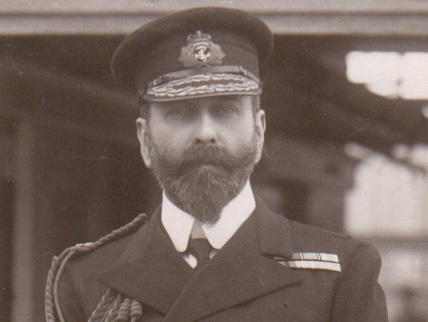
After the Dogger Bank Incident of 20/21 October 1904—where a Russian fleet on its way to the Far East opened fire on British fishing trawlers in the belief that they were Japanese warships—relations between the two Empires were strained. The Royal Navy’s Channel Squadron was ready to attack the Russians where they lay at anchor. The Director of Naval Intelligence, Rear-Admiral His Serene Highness Prince Louis of Battenberg, wrote an interesting memorandum on 2 November which is reproduced here:
Assuming that it was decided to use force to prevent the Russian Baltic Fleet from reaching the Far East, the most suitable place would be just to the West and South-West of the Straits of Sunda.
Our Fleet would be near its base at Singapore, whilst the Russian Fleet would be nearing Java, and would have been steaming 3,000 miles against the North East Trade since Reunion would be the last place they could have coaled at. [Added in handwriting:(Russian Colliers have been ordered to Réunion.)]
It may be taken for granted that the Russians would not go through the Straits of Malacca.
If they thought that the route would be barred they would not try to pass through the Straits of Sunda, but would more likely make for the islands to the South-East of Java, where there are many passages through to the North-East and many likely places at which to coal from their own colliers.
A strong Cruiser force would be required to stretch down in a South-Westerly direction from the mouth of the Straits of Sunda.
Moreover, the C. in C., Cape Station should be at Mauritius with one First and two Second Class Cruisers to watch Reunion, besides which the fast ships of the Cruiser Squadron, which would be coming round the Cape, would be able to keep touch with the Russians from Reunion towards Java.
In sufficient time the following ships should rendezvous at Singapore –
BATTLESHIPS –
5 from China Station
4 “Duncans” from Mediterranean
9, which should suffice to meet on good terms the five First and two Second Class Russian Battleships.
ARMOURED CRUISERS
2 from China
2 from Home on the way to China as reliefs for the first two
1 (Flagship) from Australia
5
PARTIALLY-ARMOURED CRUISERS
2 from China
Second Class Cruisers –
4 from China
2 . . East Indies
1 . . Australia
Third Class Cruisers –
5 from Australia
2 . . East Indies
TOTAL –
9 BATTLESHIPS
21 CRUISERS
8 DESTROYERS
One First Class and two Second Class Cruisers from Pacific could come across and be employed either in conjunction with the above force, or, preferably, keep in the China Seas whilst the China Fleet is South.
We must however be prepared to detach some armoured Cruisers to cover the three French vessels of that class at Saigon.
The Russian detachments going through the Mediterranean would have to be dealt with from there.
After despatching the four “Duncans” from the Mediterranean, we should join up the eight “Majestics” from the Channel Fleet to the remaining eight (“Formidables”) of the Mediterranean Fleet, which would suffice to meet the eight First Class, four Second Class, and four Third Class Battleships from Toulon.
Additional ships would have to be sent from Home to mask the Russian Black Sea Fleet.
No count is taken of Germany. If her Fleet had to be considered a General Mobilisation would be necessary, as we should then require every available Battleship in the North Sea.
Update: On a whim I decided to work out who would be in charge of this hypothetical force. The Commander-in-Chief on the China Station was Vice-Admiral Sir Gerard H. U. Noel (seniority of 2 November 1901), who would be the most senior and therefore in supreme command. His second-in-command was Rear-Admiral The Honourable Assheton G. Curzon-Howe (seniority of 23 July 1901). The Commander-in-Chief on the Australian Station was Vice-Admiral Arthur D. Fanshawe (seniority of 25 January 1902, and who would be appointed K.C.B. a week after Battenberg wrote his memo). The Commander-in-Chief on the East Indies Station was Rear-Admiral George L. Atkinson-Willes (seniority of 19 February 1901). At the time Rear-Admiral William des V. Hamilton (seniority of 21 January 1903) was wearing his flag in the Duncan class battleship Albemarle as Rear-Admiral in the Mediterranean Fleet (effectively third-in-command), so it is interesting to ponder if the Duncans would have been sent east with a flag officer. He was also due to be relieved at the end of the month by Rear-Admiral Sir Richard Poore, Bart.