A Titanic Fluff Up

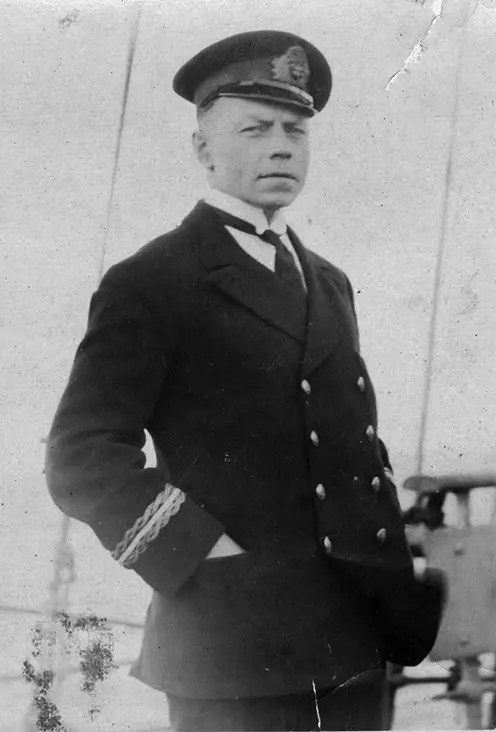
Herbert John Pitman (1877 – 1961) was Third Officer of the Titanic on her final voyage. I stumbled across his Wikipedia article yesterday and was struck by a number of things. One is the photo: he has a white stripe between his gold braid, which I thought was slightly odd for a Third Officer. In the Royal Navy a white stripe or insert signified the Accountant Branch, and for the merchant service it was the same: apparently after surviving the Titanic disaster Pitman transferred to the purser line because of colour blindness, which must have been a cruel blow to a man in his 30s.

In his infobox it was claimed that he was an Acting Paymaster who served in the Royal Naval Volunteer Reserve from 1916 to 1919. In the text it stated: ‘During World War I, Pitman served aboard troop transport ships, notably aboard RMS Teutonic as Assistant Paymaster. In 1916, he received a commission as Lieutenant in the Royal Naval Volunteer Reserve and served as Stores Officer aboard a destroyer. In 1919, he was demobilised and returned to the Merchant service.’

Perhaps unsurprisingly, this is all drivel. Mercantile marine officers, because of their actual professional experience, usually became officers in the Royal Naval Reserve, and not the Royal Naval Volunteer Reserve. Pitman was no different, becoming an Temporary Assistant Paymaster in the Royal Naval Reserve on 12 September 1914. At some point in 1917 he became an Acting Paymaster, which at the end of 1918 was renamed Paymaster Lieutenant. He spent the entire war in the Teutonic, so I fail to see how he could have been in destroyers. He was still on the list of RNR officers in April 1919 but disappears by July. Perhaps because of the wartime nature of his service he has no digitised service records at The National Archives.

Naturally, this crime against history has now been fixed.
Going Home

And now, for something completely different. But still involving research. A couple of weeks ago I stayed at a hotel on the outskirts of Lincoln for work. My father was born and raised there, and his parents lived there until my grandfather died in 1990, and then my grandmother moved to Cumbria to be near us. Despite being only four or possibly five years old when I had last visited, I still remembered an astonishing amount about the house. It was what is apparently called a ‘chalet bungalow’. I could recall on the ground floor a dining room, a kitchen (yellow with decades of cigarette smoke), the main bedroom, the living room, and a large hall. Upstairs was a spare room at one end where my brother and I stayed. Presumably there was another spare room up there where my parents were put.

Whilst relaxing in the hotel after a hard day’s work, I thought I would try and find out where the house was. My father sadly died in 2021 (the same age as his father, oddly enough) so I couldn’t ask him, and my mother died 25 years before him. I loaded up the British Newspaper Archive to try and track my grandparents down, especially since my grandfather had the relatively unusual name of Edgar. Owing to the vagaries of the BNA website, the only address I could track down at first was the death notice my father had put in the Lincolnshire Echo for my grandmother, thoughtfully putting the street name in it—Eastbrook Road—but no house number. It was a start.

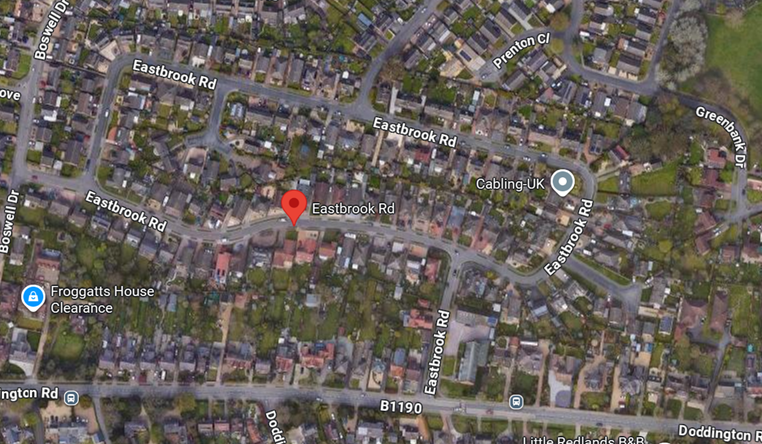
I then went to Google Maps, and found Eastbrook Road was a long circular road. Not very helpful. I suppose I could gave just gone on Street View until I found something familiar, but I wanted to do it the relatively hard way. One other detail I remembered from my childhood was that at the bottom of what seemed to be a gigantic garden some houses had been built over the time that we visited. Looking at the map it seemed that most of the surrounding streets were more of the same mishmash of post-war detached houses, apart from one area: Greenbank Drive to the east. So I went to Street View for that corner of Eastbrook Road and found number 65, looking just like my grandparents house.

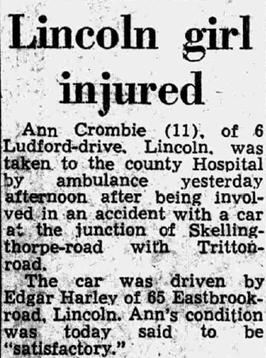
How to make sure though? I tried the British Newspaper Archive again and put in ’65 Eastbrook Road’, and the result was moderately surprising. An article about Edgar Harley of 65 Eastbrook Road knocking down an 11 year old girl in his car! Evidently the article hadn’t been OCRed very well. Confirmation obtained, albeit at the cost of yet another question raised about my family!

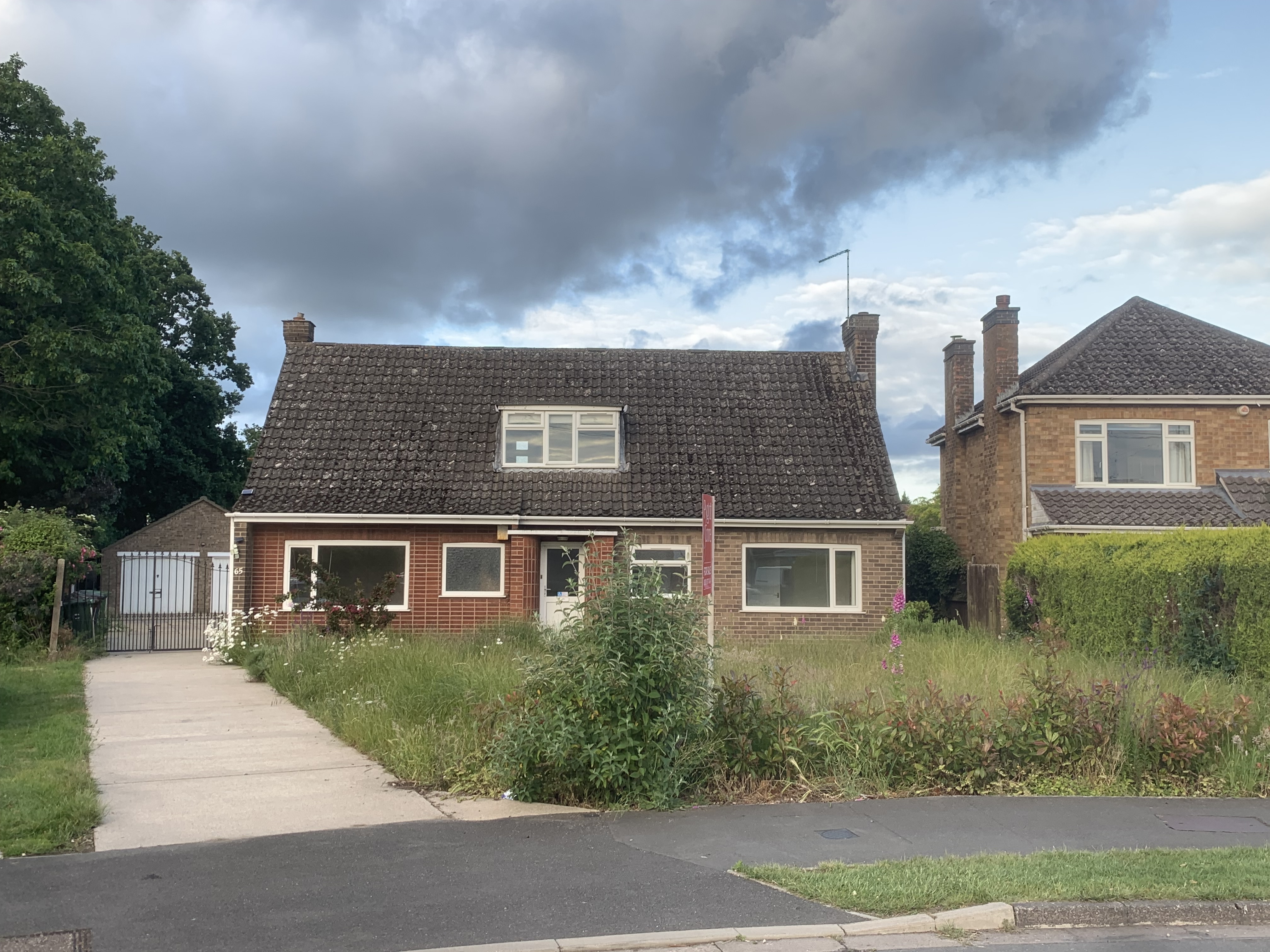
It turned out that 65 Eastbrook Road was less than ten minutes away, so I went off, not knowing what to expect. I suppose it turned out as well as it could: the house was for sale. No blinds or curtains obscured the windows. No car filled the driveway. Bottom left was the dining room. Top right was where the guest room I’d stayed in as a boy. Bottom right was a room I had no recollection of whatsoever, unless the old living room had been split into two. The driveway outside the garage had some distinctively coloured paving slabs I recognised from many old photographs in albums featuring family members and dogs.

This may all seem very trivial, but I am absolutely amazed that someone under the age of five could remember so many details. Unsurprisingly, it was rather an odd feeling being back there for the first time in 35 years. What else could it be? All the more odd on being met by a house which was literally just a shell. Apart from white paint and grey carpets it could have been the same as when my grandmother moved out. A homecoming of sorts, but one which took about 45 minutes of my day all told, including research. I’m glad I went.